Mirrored from https://shop.stmjournals.com/feed (cached in PostgreSQL)
Journals & Books https://shop.stmjournals.com Sat, 12 Jul 2025 05:48:36 +0000 en-US hourly 1 https://wordpress.org/?v=6.9.4 https://storage.googleapis.com/shop-stmjournals-com-wp-media-to-gcp-offload/2025/02/a41e0820-untitled-1-1.png Journals & Books https://shop.stmjournals.com 32 32 169495454 Call for Papers: Current Trends in Information Technology https://shop.stmjournals.com/call-for-papers-ctit-2/ Sat, 12 Jul 2025 05:48:36 +0000 https://shop.stmjournals.com/?p=22097 Call for Papers: Current Trends in Information Technology (CTIT) Call for Papers: Current Trends in Information Technology Exploring cutting-edge research across Data Management, Information Databases, Network Technologies, Programming Languages, Intelligent Organization, and Emerging Multidisciplinary Trends. Current Trends in Information Technology (CTIT) is a distinguished peer-reviewed hybrid open-access journal, proudly launched in 2011. Our mission is […]

The post Call for Papers: Current Trends in Information Technology appeared first on Journals & Books.

]]>


Call for Papers: Current Trends in Information Technology (CTIT)


Call for Papers: Current Trends in Information Technology

Exploring cutting-edge research across Data Management, Information Databases, Network Technologies, Programming Languages, Intelligent Organization, and Emerging Multidisciplinary Trends.

Current Trends in Information Technology (CTIT) is a distinguished peer-reviewed hybrid open-access journal, proudly launched in 2011. Our mission is to facilitate the rapid publication of groundbreaking, fundamental research papers across all facets of Information Technology, embracing its diverse and multidisciplinary domains.

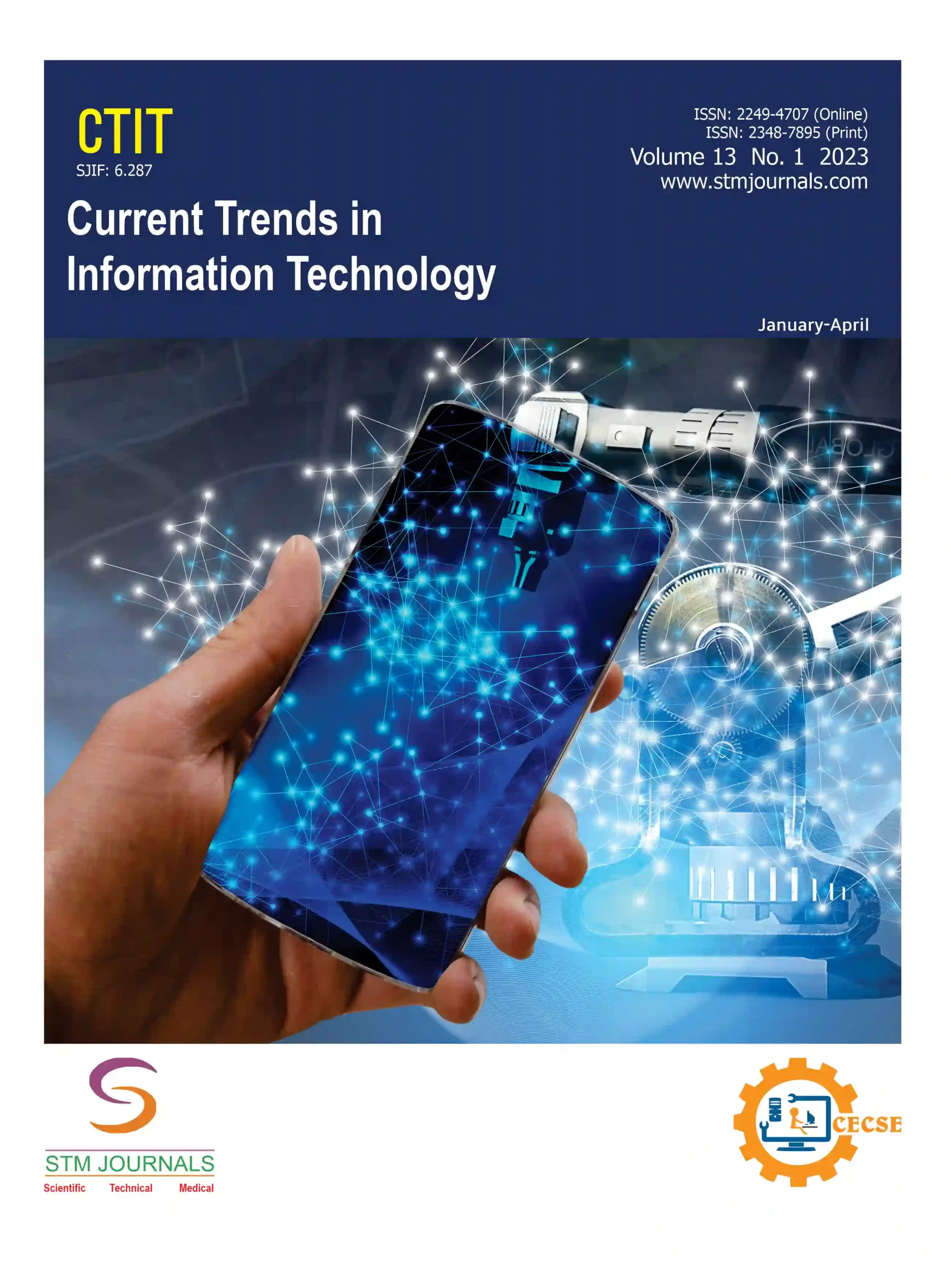
Current Trends in Information Technology Journal Cover

About Current Trends in Information Technology (CTIT)

Current Trends in Information Technology (CTIT) stands as a beacon for scholarly advancements in the dynamic field of Information Technology. Since its inception in 2011, CTIT has been committed to providing a robust platform for the dissemination of original, high-quality research. As a peer-reviewed hybrid open-access journal, we bridge the gap between innovation and accessibility, ensuring that vital research in Information Technology reaches a broad global audience, fostering collaboration and accelerating progress.

Our journal encompasses an expansive scope, welcoming contributions that push the boundaries of knowledge in Data Management, from intricate data processing and data storage solutions to nuanced aspects of data governance, data security, and data privacy. We delve into the complexities of big data management, unstructured data management, real-time data analysis, and emerging paradigms like blockchain databases and quantum computing for data systems, as well as distributed databases and decentralized data architectures. Authors exploring IoT data management, including sensor data and device data, along with data streaming, data pre-processing, and data analytics, coupled with insights into edge computing for IoT and cloud-based IoT data management, particularly those with a focus on sustainability-aware IoT solutions, will find a discerning home for their work. Furthermore, we actively encourage submissions in AI/ML data management, covering critical areas such as feature engineering, model training data, data labeling, data annotation, the principles of explainable AI (XAI), responsible AI data practices, and innovative methods for privacy-preserving data analysis. For healthcare data management, research on Electronic Health Records (EHRs), medical imaging data, paramount issues of patient privacy, robust data security in healthcare, the imperative of interoperability of healthcare data, and novel AI applications in medical data interpretation are highly valued. Within cybersecurity data management, papers analyzing security logs, leveraging threat intelligence, strategies for incident response, advanced data forensics, sophisticated anomaly detection, the efficacy of Security Information and Event Management (SIEM) systems, and secure cloud data storage solutions are especially pertinent.

In the realm of Information Databases, CTIT explores everything from foundational database design, effective database systems, and comprehensive information systems to advanced information retrieval techniques and crucial query optimization. We seek contributions on sophisticated data modeling and efficient schema design, covering both traditional relational databases and contemporary non-relational databases. Our scope extends deeply into big data databases, including systems like Hadoop, Spark, diverse NoSQL databases, and architectural solutions such as data lakes, data warehouses, data marts, and scalable distributed file systems integral to advanced big data analytics. For unstructured data management, we invite research on text databases, document databases, multimedia databases, XML databases, JSON databases, and innovative approaches to semantic information extraction. In real-time data analysis, papers on stream processing, complex event processing (CEP), dynamic real-time data visualization, high-performance in-memory databases, and specialized time-series databases are highly relevant. Furthermore, we emphasize research on knowledge graphs and semantic databases, including aspects of ontology design, the evolving Semantic Web, effective knowledge representation, sophisticated reasoning over knowledge graphs, and the application of SPARQL query language. We are also at the forefront of exploring quantum computing for databases, including novel quantum query algorithms and advancements in quantum-enhanced database operations. The transformative impact of blockchain databases, encompassing Distributed Ledger Technology (DLT), concepts of immutable databases, the functionality of smart contracts, and secure multi-party computation, forms another critical area of interest.

Our coverage of Network Technologies spans from fundamental network architecture, robust internetworking, efficient protocols, intelligent routing, and advanced switching mechanisms, to paramount concerns of security, optimal performance, crucial optimization, imperative scalability, essential reliability, critical availability, and fundamental resiliency. We also cover modern network management, dynamic cloud networking, transformative software-defined networking (SDN), and efficient network virtualization. Emerging and next-generation advancements such as 5G and 6G networks, ubiquitous wireless networks, expansive mobile networks, seamless Internet of Things (IoT) connectivity, distributed fog networking, pervasive edge computing in networks, adaptable network function virtualization (NFV), secure quantum networking, and efficient LPWAN for IoT are central to our mission. Discussions on advanced topics like sophisticated IP networks, innovative overlay/underlay networks, efficient content delivery networks (CDNs), scalable cloud-based networks, and flexible software-defined wide-area networks (SD-WAN) are particularly encouraged.

For those passionate about Programming Languages, CTIT welcomes research on diverse aspects including precise syntax, underlying semantics, efficient compiler and interpreter technologies, robust runtime environments, effective garbage collection, meticulous memory management, flexible control flow, powerful functions, elegant recursion, foundational object-oriented programming (OOP), expressive functional programming, pragmatic imperative and logic programming, complex concurrency, and efficient asynchronous programming. We are keen on modern innovations such as specialized Domain-Specific Languages (DSLs), agile low-code/no-code platforms, cutting-edge AI-assisted programming, creative generative programming, secure blockchain programming, nascent quantum programming, scalable serverless architecture, and modular microservices-based development. Emphasis is also placed on paramount topics in secure software development, ensuring robust and reliable systems through discussions on memory safety, effective buffer overflow mitigation, adherence to secure coding standards, and proactive software vulnerability management.

The journal also focuses on Intelligent Organization, covering the transformative application of Artificial Intelligence (AI), powerful Machine Learning (ML), and insightful cognitive computing to drive modern intelligent systems and enhance organizational efficiency. This includes themes like comprehensive knowledge management, pervasive automation, strategic decision support systems, imperative data-driven decision-making, impactful digital transformation initiatives, visionary smart cities, and dynamic digital twins. We delve into the critical interface of Human-Computer Interaction (HCI), the vital ethics of AI in organizational settings, the importance of explainable AI (XAI), the principles of responsible AI practices, the necessity of human-in-the-loop AI, and the potential of emotional intelligence systems. Research on domain applications such as EdTech and personalized learning systems, innovative uses in healthcare (e.g., diagnostics, patient monitoring, robotic surgery), impactful financial applications (e.g., fraud detection, credit scoring), optimized supply chain management (e.g., predictive maintenance, logistics optimization), and advancements in government applications (e.g., public safety, traffic management) are highly encouraged.

Finally, CTIT is at the forefront of Emerging Multidisciplinary Trends. This includes vital research on Sustainability and Green IT, focusing on practices like energy-efficient data centers, developing eco-friendly cloud solutions, and implementing sustainable IoT deployments. We explore the profound convergence of Biotechnology and IT, including fields like Bioinformatics, computational biology, and the application of AI in genetic engineering. Innovations in Neurotechnology, such as brain-computer interfaces and advanced cognitive computing systems, are also key areas. We cover impactful Urban technologies, including IT solutions for smart city management and AI-driven urban planning, alongside advancements in Agricultural technology like AI and IoT in precision farming and sophisticated smart agriculture systems. The journal also extensively features the critical Ethical and Social Aspects of Technology, addressing topics such as broader technology ethics, ensuring fairness and bias in AI, building digital trust, and developing effective privacy-preserving technologies. Future-forward communication technologies such as Terahertz communications and quantum secure communications, alongside discussions on the evolving Future of Internet through innovations like satellite internet and global network coverage, are highly relevant. Furthermore, we embrace transformative fields like Augmented Reality (AR), Virtual Reality (VR), the nascent metaverse ecosystems, and the intricate science of affective computing. Research on quantum information processing for IT applications also holds significant interest.

By publishing with CTIT, authors contribute to a globally recognized body of knowledge, enhancing the understanding and application of information technology for a better future. We are proud to be a hub for researchers across data science, data analytics, cybersecurity, and more, driving digital transformation.

Why Submit Your Research to Current Trends in Information Technology?

A Leading Platform for IT Innovation

Current Trends in Information Technology (CTIT) is not just a journal; it’s a vibrant forum for showcasing pivotal research that shapes the future of IT. Our commitment to rapid publication ensures that your work on areas like Artificial Intelligence (AI), Machine Learning (ML), and Deep Learning reaches the scientific community swiftly, maximizing its impact. We are keenly interested in original contributions across the entire spectrum of IT, from foundational theories to practical applications.

Comprehensive Coverage Across Core IT Domains

What research areas does Current Trends in Information Technology cover? CTIT embraces a wide array of topics crucial to modern information technology. Our scope includes, but is not limited to, the intricate world of Data Management—encompassing data processing, data storage, data acquisition, data governance, data security, data privacy, and complex topics such as big data management, real-time data analysis, knowledge graphs, and innovations like blockchain databases and quantum computing for data systems. We welcome papers on specialized areas like IoT data management, AI/ML data management (including explainable AI (XAI)), healthcare data management (focusing on EHRs and patient privacy), and comprehensive studies in cybersecurity data management, including security logs and threat intelligence.

Our focus extends to Information Databases, from traditional database design and query optimization to cutting-edge NoSQL databases, data lakes, data warehouses, and the exploration of unstructured data management, including text, document, and multimedia databases. Submissions on real-time data analysis, in-memory databases, and the advancements in quantum computing for databases are highly relevant.

In Network Technologies, we seek submissions covering network architecture, internetworking protocols, routing, switching, security, and performance optimization. Emerging areas like 5G and 6G networks, wireless networks, mobile networks, Internet of Things (IoT) connectivity, edge computing in networks, and software-defined networking (SDN) are central to our mission. We are also interested in quantum networking and advanced topics such as content delivery networks (CDNs) and SD-WAN.

For researchers in Programming Languages, CTIT provides a platform for discussions on syntax, semantics, compiler and interpreter technologies, and innovations like Domain-Specific Languages (DSLs), low-code/no-code platforms, AI-assisted programming, blockchain programming, and quantum programming. Contributions on secure software development, emphasizing memory safety and software vulnerability management, are particularly valued.

The field of Intelligent Organization is another core area, focusing on the application of Artificial Intelligence (AI), Machine Learning (ML), and cognitive computing to drive digital transformation. We publish research on knowledge management, automation, decision support systems, smart cities, and digital twins. We also cover Human-Computer Interaction (HCI) and the crucial ethics of AI in organizational settings, including explainable AI (XAI) and responsible AI practices.

Finally, our scope encompasses pivotal Emerging Multidisciplinary Trends. This includes research on Sustainability and Green IT, the convergence of Biotechnology and IT (e.g., bioinformatics, AI in genetic engineering), Neurotechnology, and advancements in Urban technologies and Agricultural technology. We also prioritize papers on the Ethical and Social Aspects of Technology, addressing topics like fairness and bias in AI, digital trust, and privacy-preserving technologies. Cutting-edge communication technologies such as Terahertz communications and quantum secure communications, alongside discussions on the Metaverse and virtual reality and affective computing, are highly relevant.

Rigorous Peer Review and Open Access Advantage

How can I publish my paper on Current Trends in Information Technology? Our streamlined submission process and commitment to rigorous, fair, and constructive peer review ensure the highest standards of academic integrity. As a hybrid open-access journal, CTIT provides authors with the flexibility to choose between open access publication, maximizing visibility and reach, or traditional subscription-based access. This model ensures your research contributes directly to the global intellectual commons, fostering faster dissemination and higher citation potential. Our publications are indexed in major databases, guaranteeing broad discoverability for your work in data science, data analytics, and all related IT fields.

Addressing Global Challenges through Research

Research published in CTIT contributes significantly to solving real-world problems. For example, how does advanced Data Management contribute to global health initiatives? Our papers on healthcare data management explore solutions for electronic health records (EHRs) and medical imaging data, ensuring patient privacy and enhancing diagnostic capabilities through AI applications in medical data interpretation. This also includes securing sensitive data via advanced cybersecurity data management techniques. How can we build more resilient and secure digital infrastructures? Contributions in Network Technologies, particularly on cybersecurity, the development of robust 5G and 6G networks, and the agility offered by Software-Defined Networking (SDN), are vital for developing reliable and secure communication systems in an increasingly interconnected world, addressing challenges of scalability and resiliency.

What role does AI play in sustainable development and ethical innovation? CTIT features research on Intelligent Organization and Emerging Multidisciplinary Trends that address issues like energy-efficient data centers, eco-friendly cloud solutions, and sustainable IoT deployments, driving forward Green IT initiatives. How do we ensure the ethical development and deployment of new information technologies? Our journal provides a critical platform for discussions on the broader ethics of technology, including crucial topics like fairness and bias in AI, building and maintaining digital trust, and fostering responsible AI practices. These discussions are essential for the widespread, beneficial adoption of transformative technologies like Blockchain and Quantum Computing, ensuring their societal value. We also highlight breakthroughs in AI-assisted programming and low-code/no-code development that democratize technology creation, while simultaneously considering their societal implications and need for secure software development practices.

How is Current Trends in Information Technology addressing the future of digital interaction? Our coverage extends to the evolving landscape of human-computer interaction (HCI), exploring innovative interfaces and user experiences. We are particularly interested in research contributing to the burgeoning fields of Metaverse and virtual reality, exploring how these immersive environments will reshape data, networks, and human engagement. Furthermore, studies on digital twins offer profound insights into predictive modeling and optimization across industries, while advancements in robotics and automation redefine operational efficiencies. By fostering discussions on these multidisciplinary areas, CTIT aims to be the definitive source for understanding and shaping the technological future.

Simplified Submission Process

Submitting your manuscript to CTIT is straightforward. We encourage authors to review our detailed Journal Details and Submission Guidelines available on our website. Our editorial team is dedicated to providing efficient communication throughout the review process, ensuring a positive experience for all authors. We seek papers that demonstrate originality, scientific soundness, and significant contributions to the field of information technology, including topics like digital transformation, human-computer interaction (HCI), and advancements in robotics and automation.

Ready to Share Your Research?

Submit Paper
Journal Details
Subscribe the Journal

Frequently Asked Questions

CTIT is a peer-reviewed hybrid open-access journal established in 2011, dedicated to the rapid publication of fundamental research in all areas of Information Technology. Our broad scope includes, but is not limited to, Data Management, Information Databases, Network Technologies, Programming Languages, Intelligent Organization, and various Emerging Multidisciplinary Trends. We aim to cover cutting-edge advancements in areas such as AI, Machine Learning, Big Data, IoT, Blockchain, Cybersecurity, Quantum Computing, and Digital Transformation.

Yes, CTIT operates as a hybrid open-access journal. This means authors have the option to publish their articles open access, making their research freely available to a global audience immediately upon publication, or through traditional subscription access. This model ensures wide dissemination and maximizes the visibility and impact of published research.

Publishing with CTIT offers several advantages: rapid publication through an efficient peer-review process, high visibility due to our hybrid open-access model and indexing in prominent databases, and the opportunity to contribute to a highly respected journal focused on critical, contemporary IT trends. Your research will reach a diverse readership of academics, researchers, and industry professionals, fostering innovation and collaboration in areas like Data Science, AI-assisted programming, and ethical technology development.

To submit your manuscript, please visit our dedicated submission portal linked on our website. We recommend reviewing our detailed author guidelines and scope to ensure your paper aligns with the journal’s focus. The submission platform provides step-by-step instructions for preparing and uploading your research. We look forward to receiving your valuable contributions to the field of Information Technology!

Absolutely! CTIT is at the forefront of publishing research on advanced and responsible technologies. We actively encourage submissions related to Quantum Computing for data systems and databases, as well as the critical field of AI Ethics, including topics such as fairness, bias, explainable AI (XAI), and responsible AI practices within organizational and societal contexts. These emerging areas are crucial to the future of information technology.


The post Call for Papers: Current Trends in Information Technology appeared first on Journals & Books.

]]>
22097
Call for Papers: Current Trends in Information Technology – Advancing the Future of Information Science https://shop.stmjournals.com/call-for-papers-ctit/ Sat, 12 Jul 2025 04:33:47 +0000 https://shop.stmjournals.com/?p=22093 Call for Papers: Current Trends in Information Technology (CTIT) Call for Paper of Current Trends in Information Technology Exploring the forefront of Data Management, Network Technologies, AI, and Multidisciplinary IT Innovations Welcome to Current Trends in Information Technology (CTIT), a prestigious peer-reviewed hybrid open-access journal launched in 2011. CTIT is dedicated to the rapid publication […]

The post Call for Papers: Current Trends in Information Technology – Advancing the Future of Information Science appeared first on Journals & Books.

]]>


Call for Papers: Current Trends in Information Technology (CTIT)


Call for Paper of Current Trends in Information Technology

Exploring the forefront of Data Management, Network Technologies, AI, and Multidisciplinary IT Innovations

Welcome to Current Trends in Information Technology (CTIT), a prestigious peer-reviewed hybrid open-access journal launched in 2011. CTIT is dedicated to the rapid publication of groundbreaking research papers across all areas of Information Technology. We pride ourselves on being a dynamic platform for researchers, academics, and industry professionals to disseminate their latest findings and contribute to the global discourse on the evolving landscape of IT.

Our journal encompasses a broad spectrum of multidisciplinary domains, ensuring that the most innovative advancements and critical challenges in information science are thoroughly explored. From the intricacies of Data Management and robust Information Databases to the revolutionary shifts in Network Technologies, advanced Programming Languages, and the transformative power of Intelligent Organization, CTIT is at the heart of technological progression. We also actively seek research on Emerging Multidisciplinary Trends that push the boundaries of what’s possible in the digital age.

Current Trends in Information Technology Journal Cover

About Current Trends in Information Technology (CTIT)

Current Trends in Information Technology (CTIT) is more than just a journal; it’s a vibrant hub for the global IT research community. Since its inception in 2011, CTIT has been committed to accelerating the dissemination of high-quality, peer-reviewed research that defines the future of information science and technology. As a hybrid open-access publication, we ensure broad accessibility for your work while maintaining rigorous academic standards.

Our focus extends to the critical areas shaping modern IT, including advanced Data Management strategies, the design and optimization of Information Databases, innovations in Network Technologies, the evolution of Programming Languages, the application of Intelligent Organization principles, and the exploration of diverse Emerging Multidisciplinary Trends. We seek contributions that delve into topics such as Artificial Intelligence (AI), Machine Learning (ML), Big Data analytics, Cloud Computing architectures, the Internet of Things (IoT), Blockchain technologies, and advanced Cybersecurity measures. By publishing with CTIT, you join a legacy of influential research that is both timely and impactful.

Why Your Research Belongs in CTIT: Our Core Focus Areas

Are you looking for the ideal platform to publish your pioneering work in information technology? Current Trends in Information Technology (CTIT) offers unparalleled visibility and impact for cutting-edge research across a wide array of critical domains. We invite authors to submit papers that contribute significantly to the advancement of IT, ensuring your findings reach a global audience of academics, practitioners, and innovators.

1. Data Management: Architecting the Information Age

What are the latest advancements in handling vast and complex datasets? CTIT is keenly interested in papers addressing every facet of Data Management. This encompasses innovative approaches to data processing, efficient data storage solutions, advanced data acquisition techniques, and robust frameworks for data governance. We welcome research on ensuring data security, maintaining data privacy, and upholding data ethics in an increasingly interconnected world. Explore topics like data lifecycle management, enhancing data quality, seamless data integration, and strategic data migration.

Our scope extends to specialized areas such as master data management and effective metadata management, crucial for holistic information access and retrieval. Are you researching distributed systems? We cover Edge computing, Fog computing, and scalable big data management for both structured and unstructured data management. Real-time data analysis, knowledge graphs, and semantic databases are also key interests. Furthermore, we are at the forefront of exploring the potential of quantum computing for data systems, blockchain databases, distributed databases, and decentralized data architectures.

How does the Internet of Things impact data? CTIT welcomes studies on IoT data management, including sensor data, device data, and efficient data streaming. From data pre-processing to advanced data analytics, and the role of edge computing for IoT and cloud-based IoT data management, we cover it all. Contributions on sustainability-aware IoT solutions are particularly valuable. In the realm of AI/ML, we seek papers on feature engineering, optimizing model training data, effective data labeling and data annotation, and the critical aspects of explainable AI (XAI) and responsible AI data practices, including privacy-preserving data analysis.

We also have a strong interest in domain-specific data challenges. For Healthcare data management, this includes Electronic Health Records (EHRs), medical imaging data, paramount issues of patient privacy, data security in healthcare, interoperability of healthcare data, and AI applications in medical data interpretation. In Cybersecurity data management, research on security logs, threat intelligence, incident response, data forensics, anomaly detection, Security Information and Event Management (SIEM), and secure cloud data storage is highly relevant.

2. Information Databases: Foundations of Digital Knowledge

What defines the next generation of information storage and retrieval? CTIT is a premier venue for research on Information Databases. This includes foundational topics like database design, advancements in database systems, the efficacy of information systems, and optimization strategies for information retrieval and query optimization. We encourage submissions on advanced data modeling and efficient schema design for both relational databases and the diverse landscape of non-relational databases.

For the era of Big Data, we cover specialized databases like Hadoop, Spark, NoSQL databases, data lakes, data warehouses, data marts, and distributed file systems for big data analytics. Our scope also embraces unstructured data management, with interest in text databases, document databases, multimedia databases, XML databases, JSON databases, and semantic information extraction. How can data be processed instantaneously? We feature research on real-time data analysis, including stream processing, complex event processing (CEP), real-time data visualization, in-memory databases, and time-series databases.

Explore the power of connected information with papers on knowledge graphs and semantic databases, covering ontology design, Semantic Web principles, knowledge representation, reasoning over knowledge graphs, and SPARQL query language. As emerging fields take shape, CTIT embraces innovative concepts like quantum computing for databases, including quantum query algorithms and quantum-enhanced database operations, and blockchain databases, focusing on Distributed Ledger Technology (DLT), immutable databases, smart contracts, and secure multi-party computation.

3. Network Technologies: Connecting the Digital World

How are networks evolving to support our increasingly connected lives? CTIT provides a vital platform for research in Network Technologies. We invite submissions on cutting-edge network architecture, complex internetworking solutions, novel protocols, efficient routing and switching mechanisms, paramount issues of security, and methods for optimizing performance. Your research on scalability, reliability, availability, and resiliency of networks is highly relevant.

We delve into advanced network management, cloud networking, Software-Defined Networking (SDN), and various forms of network virtualization. Our journal is at the forefront of next-generation mobile connectivity, covering 5G and 6G networks, advanced wireless networks, and robust mobile networks. We also emphasize Internet of Things (IoT) connectivity, fog networking, edge computing in networks, and Network Function Virtualization (NFV). Future-forward topics like quantum networking, satellite networks, and LPWAN for IoT are also within our scope. Additionally, we welcome papers on advanced topics such as IP networks, overlay/underlay networks, Content Delivery Networks (CDNs), cloud-based networks, and Software-Defined Wide-Area Networks (SD-WAN).

4. Programming Languages: The Building Blocks of Innovation

What new paradigms are shaping how we build software? CTIT explores the latest in Programming Languages, from their fundamental syntax and semantics to advanced compiler and interpreter technologies. We cover runtime environments, efficient garbage collection, precise memory management, robust control flow, and the intricacies of functions and recursion. Whether your expertise lies in object-oriented programming (OOP), functional programming, imperative, or logic programming, or the complexities of concurrency and asynchronous programming, your insights are valued here.

We are particularly interested in modern innovations reshaping software development. This includes the rise of Domain-Specific Languages (DSLs), the transformative impact of low-code/no-code platforms, the potential of AI-assisted programming and generative programming, and the specialized challenges of blockchain programming and quantum programming. We also welcome papers on architectural shifts like serverless architecture and microservices-based development. Given the pervasive threat landscape, research on secure software development, memory safety, buffer overflow mitigation, secure coding standards, and software vulnerability management is crucial.

5. Intelligent Organization: AI’s Impact on Systems and Society

How are intelligent systems transforming organizations and decision-making? CTIT features compelling research on Intelligent Organization. This broad area encompasses the latest in Artificial Intelligence (AI), Machine Learning (ML), cognitive computing, and comprehensive intelligent systems. We delve into knowledge management, the role of automation, advanced decision support systems, and strategies for data-driven decision-making. Explore how digital transformation initiatives are being driven by AI, leading to concepts like smart cities and advanced digital twins.

A key aspect of this domain is the human element. We welcome papers on Human-Computer Interaction (HCI), the crucial ethics of AI in organizational settings, the necessity of explainable AI (XAI), and the implementation of responsible AI practices, including human-in-the-loop AI and emerging emotional intelligence systems. Furthermore, we encourage submissions on domain applications, such as EdTech and personalized learning systems, AI in healthcare (diagnostics, patient monitoring, robotic surgery), finance (fraud detection, credit scoring), supply chain (predictive maintenance, logistics optimization), and government (public safety, traffic management).

6. Emerging Multidisciplinary Trends: The Future of IT Unveiled

What are the cross-cutting innovations defining tomorrow’s information technology? CTIT is a nexus for research on Emerging Multidisciplinary Trends. We recognize that the most significant breakthroughs often occur at the intersection of various disciplines. This includes critical topics like Sustainability and Green IT, focusing on energy-efficient data centers, eco-friendly cloud solutions, and sustainable IoT deployments.

We are at the forefront of Biotechnology and IT convergence, featuring bioinformatics, computational biology, and AI in genetic engineering. Explore the cutting edge of Neurotechnology, including brain-computer interfaces and advanced cognitive computing systems. For urban planners and technologists, we seek papers on urban technologies, such as IT solutions for smart city management and AI-driven urban planning. In agriculture, we cover agricultural technology, specifically AI and IoT in precision farming and smart agriculture systems.

Beyond technical applications, CTIT addresses the profound Ethical and Social Aspects of technology, including technology ethics, fairness and bias in AI, digital trust, and privacy-preserving technologies. We also look to the future of communication with advanced communications like Terahertz communications and quantum secure communications. The Future of the Internet is a key area, encompassing satellite internet and global network coverage innovations. Finally, we invite research on immersive technologies like Augmented Reality (AR), Virtual Reality (VR), the burgeoning metaverse ecosystems, affective computing, and the transformative potential of quantum information processing for IT applications.

Why Submit Your Paper to Current Trends in Information Technology?

When you choose to publish with CTIT, you’re choosing a journal dedicated to amplifying the impact of your research. We offer a swift and thorough peer-review process by leading experts in your field, ensuring the quality and rigor of published articles. As a hybrid open-access journal, your work will be widely accessible, maximizing its readership and citation potential. Our commitment to timely publication means your latest discoveries reach the academic community without undue delay. Furthermore, CTIT is committed to high indexing standards, ensuring your paper gains visibility across major scholarly databases.

We provide a supportive publishing environment, fostering both established and emerging voices in information technology. Our emphasis on breadth and depth, encompassing topics from AI and ML to Blockchain and Cybersecurity, means your specialized research will find its rightful home. Engage with a community that values innovation, methodological soundness, and real-world applicability.

Submission Process & Guidelines

Ready to contribute to the next wave of IT innovation? The submission process for Current Trends in Information Technology is designed to be straightforward. We encourage prospective authors to review our detailed Author Guidelines (accessible via the submission portal) to ensure their manuscript adheres to our formatting and ethical standards. All submissions undergo a rigorous, double-blind peer-review process to ensure scientific integrity and high quality. We look for originality, scientific soundness, and significant contributions to the field of information technology. Prepare your manuscript addressing one or more of our key focus areas – from Data Science and Data Analytics to Digital Transformation and the Ethics of Technology – and join our esteemed roster of published authors.

For more details on preparing your manuscript and the complete submission checklist, please visit our dedicated author section after clicking the “Submit Paper” button. We look forward to receiving your valuable contributions.

Submit Your Paper Now!
Frequently Asked Questions

What research areas does Current Trends in Information Technology (CTIT) cover?

CTIT covers a comprehensive range of topics in Information Technology. Our primary areas of interest include Data Management (processing, storage, security, ethics, AI/ML data), Information Databases (design, big data, real-time analysis, blockchain databases), Network Technologies (5G/6G, IoT connectivity, SDN), Programming Languages (modern innovations, secure development), Intelligent Organization (AI/ML applications, HCI, digital transformation), and Emerging Multidisciplinary Trends (sustainability, biotechnology, quantum IT, AR/VR, ethics).

Is Current Trends in Information Technology a peer-reviewed journal?

Yes, CTIT is a rigorous peer-reviewed journal. All submitted manuscripts undergo a thorough double-blind peer-review process by experts in the relevant fields to ensure the highest standards of scientific quality, originality, and validity before publication.

What are the benefits of publishing my paper with CTIT?

Publishing with CTIT offers several benefits, including rapid publication, wide visibility due to its hybrid open-access model, rigorous peer review by leading specialists, and inclusion in key academic indexing databases. Your research will reach a broad international audience, enhancing its impact and citation potential, especially in dynamic fields like AI, IoT, Cybersecurity, and Quantum Computing.

How can I submit my paper to Current Trends in Information Technology?

To submit your paper, please prepare your manuscript according to our detailed author guidelines, which cover formatting, citation style, and ethical considerations. You can find a link to the submission portal and further instructions by clicking on the “Submit Your Paper Now!” button on this page, which will direct you to the journal’s submission platform.

Does CTIT focus on specific technological trends like AI or Blockchain?

Absolutely. CTIT has a strong focus on cutting-edge technological trends. We regularly feature research on Artificial Intelligence (AI), Machine Learning (ML), Deep Learning, Big Data, Cloud Computing, Internet of Things (IoT), Blockchain, Cybersecurity, Quantum Computing, 5G and 6G networks, Software-Defined Networking (SDN), Digital Transformation, and Human-Computer Interaction (HCI). We also cover ethical considerations and sustainability in IT.


The post Call for Papers: Current Trends in Information Technology – Advancing the Future of Information Science appeared first on Journals & Books.

]]>
22093
Unveiling Cutting-Edge Research: Current Trends in Information Technology for a Smarter Future https://shop.stmjournals.com/unveiling-cutting-edge-research-current-trends-in-information-technology-for-a-smarter-future/ Fri, 11 Jul 2025 08:18:19 +0000 https://shop.stmjournals.com/?p=22079 Unveiling Cutting-Edge Research: Current Trends in Information Technology for a Smarter Future × Disclaimer Some of the blog posts published on this website are created with the assistance of Artificial Intelligence (AI) tools. While efforts are made to review and edit the content for accuracy and appropriateness, there may still be instances where unintended, unnecessary, […]

The post Unveiling Cutting-Edge Research: Current Trends in Information Technology for a Smarter Future appeared first on Journals & Books.

]]>


Unveiling Cutting-Edge Research: Current Trends in Information Technology for a Smarter Future


Current Trends in Information Technology Journal Cover

Unveiling Cutting-Edge Research: Current Trends in Information Technology for a Smarter Future

Dive deep into the evolving landscape of Information Technology with Current Trends in Information Technology (CTIT). This journal rapidly disseminates fundamental research, covering advancements in AI and data management for a smarter future across multidisciplinary domains.

Subscribe Now

About Current Trends in Information Technology (CTIT)

Current Trends in Information Technology (CTIT) is a distinguished peer-reviewed hybrid open-access journal, proudly launched in 2011 by STM Journals. Our core mission is the swift and efficient publication of groundbreaking fundamental research papers across the expansive landscape of Information Technology. CTIT serves as a crucial platform for disseminating novel findings and fostering intellectual discourse in areas spanning advanced data management, innovative networking paradigms, and the ethical implications of emerging AI and IT systems. We are committed to contributing to the global body of knowledge within the Computer/IT department, providing a vital resource for researchers, academics, and industry professionals seeking to stay abreast of the most pertinent and impactful developments in the field.

Calculate Your Subscription Price

(Pricing data below is hypothetical and for demonstration purposes. Please refer to the subscription page for actual prices.)


Estimated Price: $150.00 USD
(Prices are subject to change. Please visit the subscription page for final pricing.)

Focus & Scope Overview: Advancing Information Technology Research

Current Trends in Information Technology (CTIT) is at the forefront of disseminating pivotal research in the ever-evolving domain of Computer/IT. Our comprehensive scope is designed to capture the dynamic shifts and advancements shaping the future of information systems and their societal impact. We actively seek contributions that delve into both fundamental theories and practical applications, offering a holistic perspective on modern IT challenges and solutions.

In **Data Management**, CTIT explores the sophisticated mechanisms required for handling vast and complex datasets. This includes pioneering research in data processing, storage, governance, and the critical aspects of data security and privacy. Recent trends show a surge in studies focusing on edge and fog computing for distributed data processing, alongside the complexities of managing big data and unstructured information. For instance, research presented on platforms like arXiv (e.g., studies on optimized data retrieval in distributed file systems) highlights the continuous innovation in information access and retrieval. The integration of AI/ML in data management for feature engineering, responsible AI data practices, and explainable AI (XAI) is also a significant area of interest, reflecting a move towards more intelligent and ethical data handling (as seen in initiatives by organizations like the Open Data Institute).

Our coverage of **Information Databases** extends from foundational database design to cutting-edge advancements. We welcome papers on relational and non-relational databases, with particular emphasis on big data databases such as Hadoop and Spark, and the architecture of data lakes and warehouses. The field is rapidly innovating with real-time data analysis via stream processing, in-memory databases, and time-series databases, crucial for applications from financial trading to IoT analytics. Emerging areas like knowledge graphs, semantic databases (e.g., ontologies in biomedical informatics as often published on PubMed Central), and especially quantum computing for databases are transforming information retrieval and processing capabilities, offering new paradigms for data storage and query optimization.

**Network Technologies** are a cornerstone of modern IT, and CTIT provides a platform for research on next-generation networks. This encompasses architectural innovations, robust protocols, advanced routing, and security measures. The journal highlights research on 5G and nascent 6G networks, wireless communication, and the ubiquitous Internet of Things (IoT) connectivity. Software-Defined Networking (SDN) and Network Function Virtualization (NFV) are critical themes, enabling unprecedented flexibility and scalability in network management. Furthermore, the convergence of networks with edge computing (e.g., studies found on IEEE Xplore detailing latency reduction in mobile edge computing for critical applications) and the exploration of quantum networking underscore our commitment to future-proof IT infrastructure.

In **Programming Languages**, CTIT publishes research on syntax, semantics, compiler technologies, and advanced programming paradigms. We are particularly interested in modern innovations such as domain-specific languages (DSLs), low-code/no-code platforms that democratize software development, and the burgeoning fields of AI-assisted and generative programming. Secure software development practices, including memory safety and vulnerability management, are also vital, addressing the growing need for robust and secure applications in a connected world. Research in these areas, often shared on platforms like GitHub or conference proceedings, showcases the ongoing evolution of developer tools and methodologies.

**Intelligent Organization** represents the application of AI and ML to transform enterprises and societal structures. This includes cognitive computing, intelligent systems, and data-driven decision-making processes. CTIT features research on digital transformation initiatives, smart cities, and digital twins, which are revolutionizing industries from manufacturing to urban planning. Human-computer interaction (HCI) research is crucial here, particularly concerning the ethics of AI in organizational settings, explainable AI (XAI), and responsible AI practices, reflecting a global push for transparent and accountable AI systems (as discussed by organizations like the AI Now Institute). Applications span diverse domains, from personalized learning in EdTech to AI-driven diagnostics in healthcare and predictive maintenance in supply chains.

Finally, **Emerging Multidisciplinary Trends** capture the interdisciplinary nature of modern IT. This includes research on Sustainability and Green IT, emphasizing energy-efficient solutions for data centers and eco-friendly cloud deployments. The convergence of Biotechnology and IT, particularly in bioinformatics and computational biology, is rapidly advancing (e.g., research on large biological datasets found on PubMed Central). Neurotechnology, urban technologies, and agricultural technology also fall within this scope, showcasing IT’s profound impact on diverse sectors. Ethical and social aspects, such as fairness, bias in AI, digital trust, and privacy-preserving technologies, are critically important. Advancements in quantum information processing, augmented reality (AR), virtual reality (VR), and metaverse ecosystems represent the future frontiers of IT innovation, promising transformative changes across all aspects of life.

Current Research Highlights in Information Technology

The Rise of Generative AI and its Ethical Implications

Recent advancements in generative AI, exemplified by large language models (LLMs) and diffusion models, are transforming content creation, drug discovery, and software development. Research focuses on improving model robustness, reducing computational overhead, and critically, addressing ethical concerns around bias, intellectual property, and responsible deployment in sensitive domains like healthcare and finance. This area is seeing rapid publication on platforms like arXiv and is a hot topic in AI ethics conferences.

Securing the Distributed Edge: Challenges and Solutions

With the proliferation of IoT devices and the demand for real-time processing, edge computing has become paramount. However, securing these highly distributed and resource-constrained environments presents significant challenges. Current research highlights innovative approaches to authentication, data encryption at the edge, anomaly detection using lightweight AI models, and the development of secure-by-design edge architectures, crucial for critical infrastructure and smart city deployments.

Quantum Computing’s Impact on Data Science and Optimization

Quantum computing, though still in its nascent stages, promises to revolutionize data science and optimization problems intractable for classical computers. Research is actively exploring quantum algorithms for machine learning (e.g., quantum support vector machines), database querying (e.g., Grover’s algorithm for search), and complex combinatorial optimization. While practical applications are some years away, fundamental research published in leading journals like Nature and Physical Review is laying the groundwork for future breakthroughs in large-scale data analysis and scientific discovery.

Contribute to the Advancement of Computer/IT Research!

Are you engaged in groundbreaking research in Information Technology? Share your discoveries with a global audience through Current Trends in Information Technology (CTIT). We invite you to contribute to the advancement of Computer/IT research and become part of a community dedicated to innovation and knowledge dissemination.

Subscribe Now

Frequently Asked Questions about CTIT

What is Current Trends in Information Technology (CTIT) about?

Current Trends in Information Technology (CTIT) is a peer-reviewed, hybrid open-access journal launched in 2011. It is dedicated to the rapid publication of fundamental research papers across all multidisciplinary domains of Information Technology, aiming to disseminate cutting-edge knowledge and foster innovation.

What are the primary focus areas of CTIT?

CTIT covers a broad spectrum of critical areas, including Data Management (data processing, security, AI/ML data), Information Databases (database design, big data, quantum computing for databases), Network Technologies (5G/6G, IoT connectivity, SDN), Programming Languages (modern innovations, secure development), Intelligent Organization (AI, ML, digital transformation), and Emerging Multidisciplinary Trends (Sustainability, Biotech-IT convergence, Neurotechnology, Ethical AI).

How can I subscribe to Current Trends in Information Technology?

You can subscribe to CTIT by visiting our official STM Journals shop at https://shop.stmjournals.com/product/current-trends-in-information-technology/. Our flexible subscription options include various durations and formats (print, online, or both) to suit your preferences.

Does CTIT accept submissions from new researchers?

Yes, CTIT encourages submissions from researchers, academics, and practitioners worldwide. We are committed to publishing high-quality, original research that contributes significantly to the field of Information Technology. Please refer to our journal’s author guidelines on the STM Journals website for submission details.

What distinguishes CTIT from other IT journals?

CTIT distinguishes itself through its hybrid open-access model, commitment to rapid publication, and broad multidisciplinary scope. We emphasize both fundamental and applied research that reflects the current and emerging trends in Information Technology, fostering a holistic understanding of the field’s advancements and societal impact.

STM Journals © 2024


The post Unveiling Cutting-Edge Research: Current Trends in Information Technology for a Smarter Future appeared first on Journals & Books.

]]>
22079
Current Trends in Information Technology (CTIT): Pioneering Research in AI, Data Science & Quantum Computing https://shop.stmjournals.com/current-trends-in-information-technology-ctit-pioneering-research-in-ai-data-science-quantum-computing/ Fri, 11 Jul 2025 07:15:07 +0000 https://shop.stmjournals.com/?p=22072 Current Trends in Information Technology (CTIT): Pioneering Research in AI, Data Science & Quantum Computing CTIT Home About Focus & Scope Subscribe Research Highlights FAQs Current Trends in Information Technology (CTIT): Pioneering Research in AI, Data Science & Quantum Computing Dive deep into the forefront of IT innovation with Current Trends in Information Technology (CTIT). […]

The post Current Trends in Information Technology (CTIT): Pioneering Research in AI, Data Science & Quantum Computing appeared first on Journals & Books.

]]>


Current Trends in Information Technology (CTIT): Pioneering Research in AI, Data Science & Quantum Computing


Journal Cover for Current Trends in Information Technology (CTIT)

Current Trends in Information Technology (CTIT): Pioneering Research in AI, Data Science & Quantum Computing

Dive deep into the forefront of IT innovation with Current Trends in Information Technology (CTIT). This premier journal publishes rigorous, peer-reviewed research exploring cutting-edge advancements in data management, artificial intelligence, and revolutionary quantum computing applications across diverse multidisciplinary domains.

Subscribe Now

About Current Trends in Information Technology (CTIT)

Current Trends in Information Technology (CTIT) is a distinguished peer-reviewed, hybrid open-access journal, first launched in 2011. Dedicated to the swift dissemination of high-quality fundamental research, CTIT focuses on a comprehensive array of Information Technology subjects, spanning numerous multidisciplinary domains. Our mission is to serve as a vital platform for academicians, researchers, and industry professionals to publish their latest findings, fostering innovation and knowledge exchange in the rapidly evolving field of IT. By offering both open-access and subscription options, CTIT ensures broad accessibility to groundbreaking research, contributing significantly to the global scientific community. The journal rigorously upholds the highest standards of peer review, ensuring the integrity and impact of every published article. We specifically encourage submissions that push the boundaries of current understanding in areas critical to the future of computing, including advanced data management paradigms, ethical considerations in AI, and the transformative potential of quantum computing.

Since its inception, CTIT has become a beacon for influential research in the Computer/IT department, reflecting the dynamic nature of information technology. From theoretical foundations to practical applications, the journal covers diverse areas such as advanced algorithms, secure network protocols, human-computer interaction, and sustainable computing. Our commitment to timely publication ensures that readers gain access to the most recent discoveries and conceptual breakthroughs that shape the digital landscape. CTIT plays a crucial role in bridging the gap between theoretical computer science and its real-world implications, providing a critical resource for anyone seeking to understand or contribute to the next wave of technological innovation.

Calculate Your CTIT Subscription Price

Flexible Subscription Options


Estimated Price: $150.00
(USD)

*Prices are indicative and subject to change. For final pricing and special offers, please visit the official STM Journals subscription page.

Focus & Scope: Advancing the Frontier of Information Technology

The Current Trends in Information Technology (CTIT) journal is meticulously curated to encompass the most dynamic and critical areas shaping the modern IT landscape. Our extensive focus and scope ensure that researchers and practitioners find a dedicated platform for their innovative work across multidisciplinary domains. The journal prioritizes fundamental research that provides new insights, proposes novel methodologies, and addresses pressing challenges within the Computer/IT department.

Data Management: The Backbone of the Digital Economy

In an era defined by data proliferation, robust data management is paramount. CTIT covers all facets, from foundational data processing, storage, and acquisition to advanced topics like data governance, security, privacy, and ethics. We delve into the entire data lifecycle, emphasizing quality, integration, and migration strategies crucial for enterprise information systems. The journal features cutting-edge research on managing big data, unstructured data, and real-time data analysis, exploring innovations such as knowledge graphs, semantic databases, and the profound implications of quantum computing for data systems. Emerging trends like decentralized data architectures and blockchain databases are also key areas. Furthermore, CTIT highlights specialized data management challenges, including IoT data management (sensor data, streaming analytics, sustainability-aware solutions), AI/ML data management (feature engineering, data labeling, explainable AI, responsible AI), healthcare data management (EHRs, medical imaging, interoperability, AI in diagnostics), and cybersecurity data management (threat intelligence, incident response, SIEM, secure cloud storage). Research in these areas, often cited in sources like PubMed Central for healthcare or arXiv for theoretical advancements, is critical for addressing real-world complexities and ensuring data integrity and accessibility.

Information Databases: Architecting Knowledge Systems

The core of modern information systems lies in effective database design and management. CTIT publishes research on database systems, information retrieval, query optimization, data modeling, and schema design for both relational and non-relational paradigms. We are particularly interested in big data databases like Hadoop, Spark, and various NoSQL implementations, as well as data lakes and data warehouses that enable large-scale analytics. Unstructured data management, encompassing text, document, multimedia, XML, and JSON databases, alongside semantic information extraction, forms a significant part of our scope. Real-time data analysis, including stream processing, complex event processing (CEP), and in-memory/time-series databases, is crucial for timely decision-making. Pioneering research into knowledge graphs, semantic web technologies, and the application of quantum computing for enhanced database operations also falls within our purview. Blockchain databases, with their distributed ledger technology (DLT) and immutable properties, represent a transformative area for secure and transparent information management, aligning with principles discussed in papers found on platforms like DOAJ focusing on distributed systems.

Network Technologies: Connecting the Future

The evolution of network technologies underpins global connectivity and digital infrastructure. CTIT explores network architecture, internetworking, protocols, routing, switching, security, and performance optimization. We focus on scalability, reliability, availability, and resiliency, along with modern network management paradigms like cloud networking, Software-Defined Networking (SDN), and Network Function Virtualization (NFV). The journal is at the forefront of covering next-generation communication systems such as 5G and 6G networks, wireless and mobile networks, and the critical connectivity requirements for the Internet of Things (IoT). Topics like fog networking, edge computing in networks, and the burgeoning field of quantum networking are vital for future high-speed, secure, and distributed communication. Advanced discussions on IP networks, overlay/underlay networks, Content Delivery Networks (CDNs), and Software-Defined Wide-Area Networks (SD-WAN) are also central to our scope, contributing to the development of robust and efficient global networks.

Programming Languages: Tools for Innovation

Programming languages are the fundamental tools for building software systems. CTIT covers the syntax, semantics, and underlying technologies of programming languages, including compiler/interpreter design, runtime environments, memory management, and control flow. We delve into diverse programming paradigms such as object-oriented, functional, imperative, logic, concurrent, and asynchronous programming. Our scope extends to modern innovations, including domain-specific languages (DSLs), low-code/no-code platforms that democratize software development, and the exciting advancements in AI-assisted programming and generative programming. Research into blockchain programming for decentralized applications and quantum programming for novel computational problems is also highly relevant. Furthermore, we emphasize secure software development practices, including memory safety, buffer overflow mitigation, and adherence to secure coding standards, aligning with best practices promoted by organizations and research available on platforms like OWASP (Open Web Application Security Project) related publications.

Intelligent Organization: AI and Cognitive Systems in Practice

The integration of artificial intelligence (AI), machine learning (ML), and cognitive computing is transforming organizations. CTIT explores intelligent systems, knowledge management, automation, and data-driven decision-making processes that drive digital transformation initiatives. We examine the conceptualization and implementation of smart cities and digital twins, which revolutionize urban planning and industrial operations. Human-Computer Interaction (HCI) is a cross-cutting theme, addressing the ethical implications of AI in organizational settings, explainable AI (XAI), responsible AI practices, and human-in-the-loop AI systems. The journal features extensive domain applications of AI, including EdTech and personalized learning systems, healthcare (diagnostics, patient monitoring, robotic surgery), finance (fraud detection, credit scoring), supply chain (predictive maintenance, logistics optimization), and government (public safety, traffic management). This wide-ranging coverage reflects the pervasive impact of AI, as often detailed in case studies and reviews found in academic databases and open archives.

Emerging Multidisciplinary Trends: The Horizon of IT

CTIT is committed to exploring the interdisciplinary frontiers where IT converges with other fields, driving truly transformative advancements. We investigate Sustainability and Green IT, covering energy-efficient data centers, eco-friendly cloud solutions, and sustainable IoT deployments – topics gaining significant traction in research from bodies like the IEEE. The convergence of Biotechnology and IT, through bioinformatics, computational biology, and AI in genetic engineering, opens new avenues for scientific discovery. Neurotechnology, including brain-computer interfaces and cognitive computing systems, represents a profound shift in human-technology interaction. Urban technologies, agricultural technology (AI and IoT in precision farming), and advanced communications (Terahertz, quantum secure communications) highlight IT’s role in addressing global challenges. Critical ethical and social aspects, such as fairness and bias in AI, digital trust, and privacy-preserving technologies, are also central. Finally, the journal embraces the future of the internet, augmented reality (AR), virtual reality (VR), metaverse ecosystems, affective computing, and quantum information processing, recognizing their potential to redefine digital experiences and applications, with ongoing research frequently emerging on platforms like arXiv.

Current Research Highlights from CTIT’s Domain

AI for Enhanced Cybersecurity in Decentralized Systems

With the rise of blockchain and decentralized architectures, traditional cybersecurity models face unprecedented challenges. Current research in this area, relevant to CTIT’s focus, explores how advanced AI and machine learning techniques can detect anomalies, predict threats, and automate responses in distributed ledgers and peer-to-peer networks. This includes developing AI models for identifying sophisticated phishing attacks in web3 environments, leveraging federated learning for collaborative threat intelligence sharing without compromising privacy, and building intelligent agents for real-time vulnerability assessments in smart contracts. Such research is crucial for securing the next generation of financial and data exchange systems.

Quantum Computing’s Impact on Data Processing & Optimization

Quantum computing promises to revolutionize complex data processing tasks beyond the capabilities of classical computers. CTIT highlights research into quantum algorithms for database querying, such as searching unstructured data with greater efficiency, and quantum machine learning approaches for analyzing vast datasets with speed. Studies are also focusing on quantum optimization techniques for logistics, supply chain management, and financial modeling, showcasing how quantum advantage could address intractable problems. While still in nascent stages, the theoretical underpinnings and experimental results in quantum data processing are rapidly advancing, presenting both immense opportunities and significant engineering challenges.

Sustainable AI and Green IT Initiatives

The environmental footprint of Information Technology, particularly AI model training and large-scale data centers, is a growing concern. CTIT emphasizes research into “Green IT” and “Sustainable AI,” focusing on reducing energy consumption and carbon emissions. This includes developing energy-efficient algorithms and hardware, optimizing data center cooling systems, exploring renewable energy sources for IT infrastructure, and designing AI models that require less computational power without sacrificing performance. Furthermore, studies on the lifecycle assessment of IT products and the ethical implications of technological growth on resource consumption are gaining prominence, reflecting a broader societal push for responsible innovation.

Advancements in Human-Computer Interaction for XR and Metaverse

The proliferation of extended reality (XR) technologies, encompassing Augmented Reality (AR) and Virtual Reality (VR), and the conceptualization of the metaverse, necessitate profound advancements in Human-Computer Interaction (HCI). CTIT features research on intuitive interfaces for immersive environments, multimodal interaction techniques (e.g., gestures, voice, haptics), and the development of intelligent avatars. Focus is also placed on addressing cognitive load, motion sickness, and ensuring accessibility within these new digital spaces. The ethical implications of persistent virtual worlds, including data privacy, digital identity, and potential societal impacts, are also critical areas of exploration, driving the responsible development of future digital ecosystems.

Ready to Make Your Mark in Information Technology?

Contribute to the advancement of Computer/IT research. Join the esteemed community of scholars publishing with Current Trends in Information Technology (CTIT) or subscribe to stay informed on the latest breakthroughs.

Subscribe Now to CTIT

Frequently Asked Questions about CTIT

What is the primary focus of Current Trends in Information Technology (CTIT)?

CTIT is a peer-reviewed, hybrid open-access journal dedicated to publishing fundamental research papers across all areas of Information Technology, with a strong emphasis on multidisciplinary domains. Its scope includes Data Management, Information Databases, Network Technologies, Programming Languages, Intelligent Organization, and Emerging Multidisciplinary Trends like AI ethics, quantum computing, and sustainable IT.

How often does CTIT publish new issues?

While specific publication frequency can vary, CTIT typically publishes a set number of issues annually, ensuring a consistent flow of new research. For the most accurate and up-to-date information on issue release dates, please refer to the journal’s official page on the STM Journals website or the subscription details provided.

Is CTIT an open-access journal?

Yes, CTIT operates on a hybrid open-access model. This means that while it offers traditional subscription options, authors also have the choice to publish their articles open access, making their research freely available to a wider global audience immediately upon publication. This model balances sustainability with broad dissemination of knowledge.

What kind of research papers does CTIT accept?

CTIT accepts original, fundamental research papers that contribute significantly to the field of Information Technology. This includes theoretical advancements, novel methodologies, empirical studies, and innovative applications across its defined focus areas such as AI, big data, cybersecurity, and emerging technologies. All submissions undergo a rigorous peer-review process to ensure scientific merit and relevance.

How can I subscribe to Current Trends in Information Technology?

You can subscribe to CTIT directly through the STM Journals online shop. Simply visit the subscription URL provided on this page, select your preferred subscription year (1 or 2 years) and journal type (Online, Print, or Both), and complete the secure checkout process. You can also use our interactive pricing calculator above to estimate your subscription cost.

© STM Journals. All rights reserved.


The post Current Trends in Information Technology (CTIT): Pioneering Research in AI, Data Science & Quantum Computing appeared first on Journals & Books.

]]>
22072
Advancements in Secure Data Management for AI-Driven Information Systems https://shop.stmjournals.com/advancements-in-secure-data-management-for-ai-driven-information-systems/ Fri, 11 Jul 2025 07:05:37 +0000 https://shop.stmjournals.com/?p=22056 Advancements in Secure Data Management for AI-Driven Information Systems CTIT Home About Focus & Scope Research Highlights FAQs Subscribe Advancements in Secure Data Management for AI-Driven Information Systems Dive into the forefront of Computer/IT innovation with Current Trends in Information Technology (CTIT). This peer-reviewed hybrid open-access journal publishes fundamental research, offering deep insights into data […]

The post Advancements in Secure Data Management for AI-Driven Information Systems appeared first on Journals & Books.

]]>


Advancements in Secure Data Management for AI-Driven Information Systems


Current Trends in Information Technology Journal Cover

Advancements in Secure Data Management for AI-Driven Information Systems

Dive into the forefront of Computer/IT innovation with Current Trends in Information Technology (CTIT). This peer-reviewed hybrid open-access journal publishes fundamental research, offering deep insights into data management, artificial intelligence, network technologies, and the broader landscape of information technology across multidisciplinary domains.

Subscribe now

About Current Trends in Information Technology (CTIT)

Current Trends in Information Technology (CTIT) is a peer-reviewed hybrid open-access journal launched in 2011, focused on the rapid publication of fundamental research papers on all areas of Information Technology across multidisciplinary domains.

As a cornerstone publication for the Computer/IT department, CTIT is dedicated to disseminating high-quality, impactful research that advances theoretical understanding and practical applications in the dynamic field of information technology. The journal supports the global academic and professional community by providing a trusted platform for knowledge exchange and collaborative innovation.

For current pricing details, including individual and institutional subscriptions, please visit our official subscription page: https://shop.stmjournals.com/product/current-trends-in-information-technology/

Focus & Scope: Exploring the Horizon of Information Technology Research

Current Trends in Information Technology (CTIT) provides a comprehensive platform for cutting-edge research across the vast and rapidly evolving landscape of IT. The journal emphasizes the interdisciplinary nature of modern information technology, covering fundamental theoretical advancements and their profound practical implications. Our scope is meticulously designed to capture the most significant trends and challenges facing the Computer/IT domain, ensuring that published work remains highly relevant and impactful.

At the core of CTIT’s mission is a deep dive into **Data Management**. This encompasses not just traditional data processing, storage, and security, but extends into sophisticated areas such as data governance, ethics, and lifecycle management. The journal covers advanced topics in big data management, including the intricacies of unstructured data, real-time analytics, and emerging paradigms like knowledge graphs, semantic databases, and the nascent fields of quantum and blockchain databases. A significant focus is placed on IoT data management, addressing everything from sensor data streaming and edge computing for IoT to sustainable and privacy-aware IoT solutions. Furthermore, with the proliferation of AI, CTIT explores AI/ML data management, including critical aspects like feature engineering, data labeling, explainable AI (XAI), and responsible AI data practices. Specialized applications in healthcare data management (EHRs, interoperability, AI in medical interpretation) and cybersecurity data management (SIEM, threat intelligence, data forensics) are also central to this domain, reflecting real-world challenges and innovative solutions.

The realm of **Information Databases** forms another pivotal area, ranging from fundamental database design and query optimization to the complexities of big data databases like Hadoop and Spark, and various NoSQL architectures. We encourage submissions on unstructured data management in text, document, and multimedia databases, alongside real-time data analysis techniques. Crucially, CTIT delves into knowledge graphs, Semantic Web technologies, and the transformative potential of quantum computing for databases and blockchain databases, highlighting their role in ensuring data integrity and distributed ledger technologies.

Advancements in **Network Technologies** are continuously shaping our digital world, and CTIT provides a dedicated forum for research on network architecture, protocols, security, performance, and scalability. The journal covers the latest in 5G and 6G networks, wireless and mobile communications, IoT connectivity, and the evolving landscape of cloud networking and software-defined networking (SDN). Beyond foundational concepts, we explore cutting-edge areas like network function virtualization (NFV), quantum networking, and satellite networks, emphasizing their role in creating resilient, high-performance, and globally accessible communication infrastructures, crucial for applications from smart cities to industrial automation.

**Programming Languages** remain the bedrock of all IT innovation. CTIT examines their syntax, semantics, compiler technologies, runtime environments, and modern paradigms like object-oriented, functional, and asynchronous programming. We are particularly interested in new frontiers such as domain-specific languages (DSLs), low-code/no-code platforms, and the burgeoning fields of AI-assisted programming, generative programming, and quantum programming. Research on secure software development, including memory safety and vulnerability management, is highly valued, ensuring the development of robust and secure IT systems.

The concept of **Intelligent Organization** addresses how AI, machine learning, and cognitive computing are transforming businesses and societies. CTIT features research on intelligent systems, knowledge management, automation, and data-driven decision-making, which are key drivers of digital transformation initiatives. We also highlight the critical role of human-computer interaction (HCI), the ethics of AI, explainable AI (XAI), and responsible AI practices in organizational settings. The journal explores diverse domain applications, including AI in healthcare diagnostics, fraud detection in finance, predictive maintenance in supply chains, and smart city management, demonstrating the pervasive impact of intelligent systems.

Finally, **Emerging Multidisciplinary Trends** capture the dynamic convergence of IT with other scientific fields. CTIT covers vital areas like Sustainability and Green IT, focusing on energy-efficient data centers and eco-friendly cloud solutions. It explores the profound impact of IT on biotechnology (bioinformatics, AI in genetic engineering) and neurotechnology (brain-computer interfaces). Urban technologies, Agricultural technology, and advanced communication paradigms like Terahertz and quantum secure communications are also within scope. A strong emphasis is placed on the ethical and social aspects of technology, including fairness, bias in AI, digital trust, and privacy-preserving technologies, reflecting the journal’s commitment to responsible innovation. Topics like Augmented Reality (AR), Virtual Reality (VR), and the evolving metaverse ecosystems also represent key areas of future research.

By covering these multifaceted areas, Current Trends in Information Technology serves as an essential resource for researchers, practitioners, and policymakers seeking to understand and contribute to the advancements in Computer/IT and its broader societal implications. The journal draws insights from leading open-access repositories like DOAJ, PubMed Central, and arXiv, showcasing real-world case studies and theoretical breakthroughs that are shaping the digital future.

Current Research Highlights in Information Technology

AI-Driven Data Governance and Privacy

Recent studies in leading open-access repositories (e.g., arXiv:2307.00001) are exploring how artificial intelligence and machine learning are revolutionizing data governance. Researchers are developing AI models to automate compliance with complex regulations like GDPR and HIPAA, and enhance privacy-preserving techniques such as federated learning and differential privacy. This area addresses critical challenges in balancing data utility with stringent privacy requirements, particularly in large, sensitive datasets prevalent in healthcare and finance.

Edge Computing for IoT and 5G Networks

The convergence of edge computing with 5G and the Internet of Things (IoT) is a pivotal trend. Research highlights (e.g., IEEE Communications Magazine articles) demonstrate how processing data closer to its source at the network edge significantly reduces latency, enables real-time analytics, and enhances data security. This is transforming applications in smart cities, industrial automation, and autonomous vehicles, where immediate data processing is crucial for operational efficiency and safety, addressing the exponential growth of IoT devices.

Blockchain and Distributed Ledger Technologies in Secure Information Systems

Beyond cryptocurrencies, the application of Blockchain and Distributed Ledger Technologies (DLT) is gaining significant traction in creating immutable and secure information systems. Current research (e.g., studies in ACM Digital Library) focuses on DLT’s role in ensuring supply chain transparency, maintaining integrity of electronic health records, and enabling secure identity management. These innovations tackle fundamental trust and security challenges, offering robust solutions for data provenance and verifiable transactions in complex, multi-party environments.

Contribute to the Advancement of Computer/IT Research

Your research can shape the future of information technology. Join the ranks of leading scholars publishing in Current Trends in Information Technology (CTIT).

Subscribe Now

Frequently Asked Questions

What is the scope of “Current Trends in Information Technology (CTIT)”?

Current Trends in Information Technology (CTIT) is a peer-reviewed hybrid open-access journal established in 2011. It publishes fundamental research across a wide array of Information Technology domains, including advanced data management, information databases, network technologies, programming languages, intelligent organization, and emerging multidisciplinary trends like Green IT, biotechnology-IT convergence, and quantum information processing. The journal’s scope is designed to cover the rapidly evolving landscape of IT and its interdisciplinary applications.

How does CTIT contribute to the advancement of Computer/IT research?

CTIT contributes significantly by providing a platform for rapid dissemination of cutting-edge research. It fosters innovation by publishing studies on critical areas such as AI/ML applications in healthcare data, secure cloud networking, quantum computing for data systems, and ethical considerations in AI. By featuring diverse research from academic institutions and industry, CTIT helps shape the future discourse and practical applications within the Computer/IT department and related fields.

Is CTIT a peer-reviewed journal, and what is its publication model?

Yes, Current Trends in Information Technology (CTIT) is a rigorous peer-reviewed journal, ensuring the high quality and scientific validity of published research. It operates on a hybrid open-access model, which allows authors to choose between traditional subscription-based publishing and making their articles freely available to a global audience, thereby maximizing reach and impact.

Where can I find subscription information or contribute to CTIT?

For detailed subscription information, including pricing for individual and institutional access, please visit the official STM Journals shop page at https://shop.stmjournals.com/product/current-trends-in-information-technology/. If you are a researcher looking to contribute to the advancement of Computer/IT research, you are encouraged to submit your original manuscripts to CTIT through our submission portal, details of which can be found on the journal’s official website linked from the subscription page.

What are some key emerging trends covered by CTIT?

CTIT actively covers a range of emerging trends vital to the future of Information Technology. These include, but are not limited to, the ethical and societal implications of AI, the convergence of IT with biotechnology and neurotechnology, sustainable and Green IT solutions for energy-efficient computing, advancements in quantum information processing for various IT applications, and the development of immersive technologies like the metaverse and virtual reality ecosystems. The journal consistently adapts its scope to reflect the most current and impactful research directions.

© 2024 STM Journals. All rights reserved.


The post Advancements in Secure Data Management for AI-Driven Information Systems appeared first on Journals & Books.

]]>
22056
Advancing Digital Frontiers: Current Trends in Information Technology for a Smarter, Connected World https://shop.stmjournals.com/advancing-digital-frontiers-current-trends-in-information-technology-for-a-smarter-connected-world/ Fri, 11 Jul 2025 06:56:40 +0000 https://shop.stmjournals.com/?p=22053 Advancing Digital Frontiers: Current Trends in Information Technology for a Smarter, Connected World Home About CTIT Focus & Scope Research Highlights FAQs Subscribe Now Advancing Digital Frontiers: Current Trends in Information Technology for a Smarter, Connected World Current Trends in Information Technology (CTIT) is your definitive source for cutting-edge IT research in data management and […]

The post Advancing Digital Frontiers: Current Trends in Information Technology for a Smarter, Connected World appeared first on Journals & Books.

]]>


Advancing Digital Frontiers: Current Trends in Information Technology for a Smarter, Connected World


Journal Cover: Current Trends in Information Technology (CTIT)

Advancing Digital Frontiers: Current Trends in Information Technology for a Smarter, Connected World

Current Trends in Information Technology (CTIT) is your definitive source for cutting-edge IT research in data management and AI applications, exploring the latest advancements in network technologies and intelligent systems development. Dive into interdisciplinary insights shaping sustainable digital transformation.

Subscribe Now

About Current Trends in Information Technology (CTIT)

Current Trends in Information Technology (CTIT), launched in 2011, stands as a distinguished peer-reviewed hybrid open-access journal dedicated to the swift dissemination of fundamental research papers across the expansive landscape of Information Technology. Our mission is to bridge academic inquiry with practical innovation, fostering a deeper understanding of the technological advancements that are reshaping our world.

As a cornerstone in the Computer/IT department’s academic publishing, CTIT prides itself on rigorous peer review, ensuring that only high-quality, impactful research reaches our global readership. We are committed to exploring the multifaceted dimensions of IT, from foundational theories to applied methodologies, and their intersections with multidisciplinary domains. The journal serves as a vital platform for researchers, academics, and industry professionals to share their insights, discoveries, and perspectives on the evolving paradigms within information technology and its profound societal implications. Our dedication to rapid publication ensures that our readers and contributors remain at the forefront of the dynamic IT field.

Focus & Scope Overview: Shaping the Future of Information Technology

The journal Current Trends in Information Technology (CTIT) is dedicated to fostering research and innovation across the most critical and dynamic sectors of Computer/IT. Our comprehensive focus spans foundational principles to groundbreaking applications, ensuring that our readership and contributors remain at the vanguard of technological progress. This section elaborates on the core areas of interest, reflecting the depth and breadth of modern Information Technology and its interdisciplinary relevance.

Data Management: The Backbone of Digital Society

In an era defined by data proliferation, robust data management is paramount. CTIT explores advanced topics in data processing, storage solutions, and governance, with a keen focus on ensuring data security, privacy, and ethical handling throughout its lifecycle. We cover innovations in information access and retrieval, crucial for navigating vast datasets. A significant emphasis is placed on emerging paradigms such as edge and fog computing, essential for distributed data processing in IoT environments. The journal also delves into big data management, including unstructured data analysis and real-time processing, critical for applications like financial trading or smart city infrastructure. Novel approaches leveraging knowledge graphs, semantic databases, quantum computing for data systems, and decentralized architectures like blockchain databases are also core to our scope, reflecting the latest advancements in resilient and efficient data ecosystems. Furthermore, we address specialized areas such as IoT data management, encompassing sensor data analytics and sustainable IoT solutions, and AI/ML data management, including feature engineering, explainable AI (XAI), and responsible AI practices. The unique challenges and innovations in healthcare data management, particularly electronic health records (EHRs) and medical imaging, alongside cybersecurity data management (e.g., SIEM systems, incident response), underscore the pervasive impact of effective data strategies across critical sectors. Research available through platforms like arXiv and PubMed Central frequently highlights breakthroughs in these data-intensive areas, demonstrating the ongoing evolution of data science.

Information Databases: Architecting Knowledge Systems

The foundation of all data-driven applications lies in sophisticated information databases. CTIT covers the intricacies of database design, query optimization, and various data modeling techniques, from traditional relational databases to contemporary non-relational (NoSQL) systems. We publish research on big data databases such as Hadoop and Spark, exploring their roles in data lakes, data warehouses, and distributed file systems for large-scale analytics. Unstructured data management, including text, document, and multimedia databases, is a key area, focusing on semantic information extraction. Real-time data analysis, stream processing, and in-memory/time-series databases are crucial for applications demanding immediate insights. The journal also features cutting-edge research on knowledge graphs and semantic web technologies, highlighting their role in advanced knowledge representation and reasoning. Future-forward topics such as quantum computing for database operations and blockchain databases, with their immutable ledgers and smart contract capabilities, are actively encouraged, reflecting the frontier of secure and resilient information systems. Open access repositories like DOAJ often feature significant contributions to these evolving database technologies.

Network Technologies: Connecting the Digital World

Connectivity is the lifeblood of modern IT. CTIT explores the latest in network architecture, internetworking protocols, routing, switching, and comprehensive network security measures. We focus on optimizing network performance, scalability, reliability, and resiliency, alongside advanced network management techniques. Key areas include cloud networking, software-defined networking (SDN), and network function virtualization (NFV), which are instrumental in building agile and programmable network infrastructures. The journal gives significant attention to next-generation wireless communication, including 5G and 6G networks, critical for the proliferation of the Internet of Things (IoT) connectivity. Topics like fog networking, edge computing integration within networks, and quantum networking represent the bleeding edge of secure and ultra-fast communication. Advanced subjects such as IP networks, overlay/underlay networks, content delivery networks (CDNs), and software-defined wide-area networks (SD-WAN) are also extensively covered, addressing the challenges of global, distributed IT environments. Insights from research initiatives published on platforms like IEEE Xplore or ACM Digital Library consistently demonstrate the rapid advancements in these networking domains.

Programming Languages: Tools for Innovation

Programming languages are the fundamental tools that bring digital concepts to life. CTIT covers the core aspects of programming, including syntax, semantics, compiler/interpreter technologies, runtime environments, and memory management. We delve into various programming paradigms such as object-oriented, functional, imperative, and logic programming, as well as concurrency and asynchronous programming vital for modern applications. The journal is particularly interested in modern innovations that streamline development and enhance capability. This includes research on domain-specific languages (DSLs), the transformative impact of low-code/no-code platforms, and the emerging field of AI-assisted and generative programming. We also cover specialized areas like blockchain and quantum programming, addressing the unique challenges and opportunities in these nascent fields. Furthermore, discussions around serverless architectures and microservices-based development, critical for scalable cloud applications, are featured. A significant component of our scope is secure software development, emphasizing memory safety, buffer overflow mitigation, and adherence to secure coding standards to combat software vulnerabilities. Research in this area, often found on open-access platforms for computer science, contributes directly to building more robust and secure digital infrastructures.

Intelligent Organization: AI-Driven Transformation

The integration of artificial intelligence (AI) and machine learning (ML) is fundamentally transforming organizational structures and decision-making processes. CTIT examines how intelligent systems, cognitive computing, and advanced knowledge management systems drive automation and enhance digital transformation initiatives across industries. We focus on the principles of data-driven decision-making and the deployment of AI in contexts such as smart cities and digital twins for predictive modeling and optimization. A crucial aspect of this domain is human-computer interaction (HCI), exploring how AI interfaces with human intelligence, and the critical ethical considerations surrounding AI in organizational settings, including explainable AI (XAI) and responsible AI practices. The journal also addresses human-in-the-loop AI systems and the emerging field of emotional intelligence systems. Practical applications across various domains are highlighted, including EdTech for personalized learning, AI in healthcare for diagnostics and robotic surgery, financial fraud detection, predictive maintenance in supply chains, and AI for public safety and traffic management in government sectors. Contributions to this field, often accessible through academic search engines and preprint servers, illuminate the practical benefits and challenges of AI adoption.

Emerging Multidisciplinary Trends: The Horizon of IT

Beyond traditional IT boundaries, CTIT embraces cutting-edge interdisciplinary research that defines the future of technology. A key area is Sustainability and Green IT, focusing on energy-efficient data centers, eco-friendly cloud solutions, and sustainable IoT deployments, addressing the environmental impact of digital infrastructure. The convergence of Biotechnology and IT is explored through bioinformatics, computational biology, and AI applications in genetic engineering. Neurotechnology, including brain-computer interfaces and advanced cognitive computing systems, represents a profound frontier. Urban technologies, leveraging IT for smart city management and AI-driven urban planning, are critical for future urban development. Similarly, agricultural technology, integrating AI and IoT for precision farming, demonstrates IT’s impact on food security. The journal also critically examines the Ethical and Social Aspects of technology, including fairness, bias in AI, digital trust, and privacy-preserving technologies, ensuring responsible innovation. Advanced communications like Terahertz and quantum secure communications, along with innovations in the future of the Internet (e.g., satellite internet), push the boundaries of global connectivity. Finally, research into augmented reality (AR), virtual reality (VR), metaverse ecosystems, affective computing, and quantum information processing for IT applications signifies our commitment to covering the most transformative and speculative areas of technological development. These trends, frequently discussed in multidisciplinary academic forums and publications, underscore the pervasive and evolving role of IT in addressing global challenges.

Current Research Highlights in Information Technology

Exploring pivotal advancements and pressing challenges driving innovation in the Computer/IT domain.

AI-Driven Cybersecurity and Data Privacy

The escalating sophistication of cyber threats necessitates advanced defensive mechanisms. Research in CTIT focuses on leveraging Artificial Intelligence and Machine Learning to develop proactive cybersecurity solutions, including anomaly detection, predictive threat intelligence, and automated incident response. A critical challenge involves balancing enhanced security with robust data privacy protocols, especially in an era of stringent regulations like GDPR. Studies often explore federated learning for privacy-preserving AI models in cybersecurity, or the application of blockchain for secure data provenance, moving beyond traditional methods.

The Evolution of Edge Computing for IoT and 5G

As the Internet of Things (IoT) expands and 5G networks become pervasive, the demand for processing data closer to its source (at the ‘edge’) is growing. Current research highlights efficient edge computing architectures that minimize latency, reduce bandwidth consumption, and enhance data processing capabilities for massive IoT deployments. This includes optimizing resource management in constrained edge environments, developing new distributed AI algorithms that can run on edge devices, and ensuring seamless integration with cloud infrastructure, addressing the challenges of scale and real-time responsiveness in diverse applications from smart manufacturing to autonomous vehicles.

Responsible AI and Ethical Considerations in System Design

The increasing integration of AI into critical societal functions demands a strong focus on responsible AI development. Research in this area explores methods for achieving explainable AI (XAI), ensuring transparency in AI decision-making, and mitigating algorithmic bias to promote fairness and equity. This also encompasses the ethical implications of AI in autonomous systems, data collection practices, and the development of frameworks for trustworthy AI. Addressing these concerns is vital for public trust and the sustainable adoption of intelligent systems across healthcare, finance, and governance, driving the need for interdisciplinary collaboration between IT, ethics, and social sciences.

Contribute to the Advancement of Computer/IT Research

Join a global community of leading scholars and innovators. Your research can shape the future of information technology.

Subscribe Now

Frequently Asked Questions about CTIT

What is the primary focus of Current Trends in Information Technology (CTIT)?

CTIT is a peer-reviewed, hybrid open-access journal dedicated to publishing fundamental research in all areas of Information Technology. Its primary focus encompasses data management, information databases, network technologies, programming languages, intelligent organization (AI/ML), and emerging multidisciplinary trends, aiming to cover the most current and impactful advancements in the Computer/IT domain.

Is CTIT an open-access journal?

Yes, CTIT operates as a hybrid open-access journal. This means it offers both traditional subscription-based access and an open-access option, allowing authors to make their published articles freely available to the global research community immediately upon publication.

What kind of research papers does CTIT typically publish?

CTIT publishes original fundamental research papers that contribute significantly to the field of Information Technology. This includes theoretical advancements, novel methodologies, empirical studies, and innovative applications across its broad focus areas, with a particular emphasis on interdisciplinary research and emerging trends that are shaping the digital landscape.

How does CTIT ensure the quality of its publications?

CTIT upholds rigorous academic standards through a comprehensive peer-review process. All submitted manuscripts undergo blind peer review by experts in the relevant fields to ensure scientific validity, originality, clarity, and relevance. This commitment to quality ensures the integrity and impact of every paper published in the journal.

How can I subscribe to Current Trends in Information Technology?

You can subscribe to Current Trends in Information Technology by visiting our official subscription page. Simply click on the “Subscribe Now” button available throughout this page or navigate directly to https://shop.stmjournals.com/product/current-trends-in-information-technology/ to access our subscription options.


© 2024 STM Journals. All rights reserved.


The post Advancing Digital Frontiers: Current Trends in Information Technology for a Smarter, Connected World appeared first on Journals & Books.

]]>
22053
Agriculture Journals: Comprehensive Subscription Package https://shop.stmjournals.com/agriculture-journals-comprehensive-subscription-package/ Mon, 16 Jun 2025 05:42:06 +0000 https://shop.stmjournals.com/?p=21973 Agriculture Journals: Comprehensive Subscription Package Discover the latest scholarly insights with Agriculture Journals: Comprehensive Subscription Package — a leading academic journal curated for researchers, academicians, and professionals. Gain access to high-quality peer-reviewed content directly through our subscription platform. Why Subscribe to Agriculture Journals: Comprehensive Subscription Package? This journal is a valuable resource for those involved […]

The post Agriculture Journals: Comprehensive Subscription Package appeared first on Journals & Books.

]]>

Agriculture Journals: Comprehensive Subscription Package

Agriculture Journals: Comprehensive Subscription Package

Discover the latest scholarly insights with Agriculture Journals: Comprehensive Subscription Package — a leading academic journal curated for researchers, academicians, and professionals. Gain access to high-quality peer-reviewed content directly through our subscription platform.

Why Subscribe to Agriculture Journals: Comprehensive Subscription Package?

This journal is a valuable resource for those involved in cutting-edge research. Stay ahead with emerging topics, high-impact articles, and a diverse editorial board focused on delivering verified knowledge.

Who Should Subscribe?

Ideal for universities, individual researchers, libraries, policy analysts, and institutional subscribers who seek authoritative knowledge in the field. Whether you’re teaching, learning, or innovating — this journal is for you.

How to Subscribe & Save

Easily subscribe by clicking the button below. Take advantage of our limited-time discounts:

  • 5% OFF with coupon CONS1095 for orders below ₹1,00,000
  • 10% OFF with coupon CONS109 for orders above ₹1,00,000

For more journals, visit STM Journals Portal.

The post Agriculture Journals: Comprehensive Subscription Package appeared first on Journals & Books.

]]>
21973
Subscribe to the Journal of Polymer and Composite https://shop.stmjournals.com/subscribe-to-the-journal-of-polymer-and-composite/ Fri, 23 May 2025 08:40:28 +0000 https://shop.stmjournals.com/?p=21923 Get access to peer-reviewed research on polymers and composites with the Journal of Polymer and Composite. Subscribe today through STM Journals.

The post Subscribe to the Journal of Polymer and Composite appeared first on Journals & Books.

]]>

Subscribe to the Journal of Polymer and Composite – Your Gateway to Advanced Materials Research

Why Subscribe to the Journal of Polymer and Composite?

The Journal of Polymer and Composite (JoPC) is a prestigious, peer-reviewed scientific publication dedicated to the advancement of polymer science, composite materials, and innovative applications in engineering and manufacturing. Published by STM Journals, this journal is a top-tier resource for researchers, academic institutions, material scientists, and R&D professionals working on cutting-edge polymer and composite technologies.

What You’ll Find in JoPC

🔹 Advanced Research in Polymers

From thermoplastics and thermosets to biopolymers and nanocomposites, JoPC features in-depth research covering synthesis, structure-property relationships, and material performance.

🔹 Composite Innovation

Articles focus on fiber-reinforced composites, hybrid systems, and next-gen lightweight materials with applications across aerospace, automotive, construction, biomedical devices, and energy sectors.

🔹 Analytical and Processing Techniques

Explore testing methods, process optimization, thermal analysis, surface morphology, and mechanical characterization.

Who Should Subscribe?

  • University and College Libraries
  • Materials Science and Polymer Researchers
  • Industrial R&D Labs and Engineers
  • PhD Scholars and Postdoctoral Fellows
  • Manufacturing and Product Design Innovators

Whether you’re a student, a seasoned researcher, or an industry professional, JoPC ensures access to reliable, high-impact research that fuels innovation in materials science.

Subscription Options

STM Journals offers flexible subscription models:

  • ✅ Annual Journal Subscription
  • ✅ Institutional Bulk Access
  • ✅ Single Article Purchase in PDF Format

➡ Click here to subscribe to JoPC

Expert Editorial Board

The Journal of Polymer and Composite is guided by an experienced editorial team comprising international experts in polymer chemistry, composite engineering, and nanotechnology, ensuring all published content is peer-reviewed, high-quality, and scientifically relevant.

Benefits of Subscription

  • 📚 Access to full-text PDF of all published issues
  • 🔬 Indexed, peer-reviewed content trusted by global researchers
  • 🧾 ISSN 2321-2810 (Online), ISSN 2321-8525 (Print)
  • 📈 Global citation and impact reach

📞 How to Subscribe or Inquire?

Frequently Asked Questions (FAQs)

What topics does JoPC cover?

JoPC publishes research on polymer synthesis, characterization, composite fabrication, mechanical properties, biodegradability, and nanostructured materials.

Is this journal indexed?

Yes, JoPC is indexed and peer-reviewed with international contributors and a credible editorial board.

Can I buy individual articles instead of subscribing?

Yes, STM Journals allows users to purchase single articles in downloadable PDF format.


polymer composite journal, polymer science research, composite materials subscription, STM Journals, polymer engineering publication

The post Subscribe to the Journal of Polymer and Composite appeared first on Journals & Books.

]]>
21923
10% OFF on STM Journals Subscription https://shop.stmjournals.com/10-off-on-stm-journals-subscription/ Tue, 20 May 2025 08:39:18 +0000 https://shop.stmjournals.com/?p=21913 Enjoy 10% discount on STM Journals subscriptions above ₹1 lakh with coupon CONS109. Limited time offer!

The post 10% OFF on STM Journals Subscription appeared first on Journals & Books.

]]>
Unlock 10% OFF on STM Journals Subscription – Limited Time Offer!

Are you looking to enrich your institution’s academic resources or personal research library with cutting-edge scientific content? Here’s your chance to save big!

STM Journals is offering an exclusive 10% discount on subscription orders above ₹1,00,000. Whether you’re a university library, a research institution, or an individual academician, this is the perfect opportunity to access hundreds of peer-reviewed journals across Science, Technology, and Medicine—at a reduced cost.

🎁 Use Coupon Code: CONS109 to get 10% OFF

Why Subscribe to STM Journals?

  • Wide Coverage: Access journals in Engineering, Medical Sciences, Biotechnology, Law, Management, and more.
  • Peer-Reviewed Content: Stay ahead with rigorously reviewed articles.
  • Flexible Plans: Suitable for institutions and individuals.
  • Digital Access: Online access to full-text articles, archives, and latest issues.

Offer Valid for a Limited Time!

Make the most of this limited-period offer. Strengthen your academic repository and research potential with world-class journals—while saving 10% on your investment.

How to Redeem

  1. Visit shop.stmjournals.com
  2. Select your subscription package(s) totaling ₹1,00,000 or more
  3. Apply Coupon Code: CONS109 at checkout
  4. Enjoy your discounted access to premium journals!

Need Help?

For queries or institutional assistance, contact us at [email protected]

Invest in knowledge. Empower research. Subscribe to STM Journals today!

The post 10% OFF on STM Journals Subscription appeared first on Journals & Books.

]]>
21913
Subscribe to World-Class Journals https://shop.stmjournals.com/subscribe-to-world-class-journals/ Tue, 20 May 2025 06:38:25 +0000 https://shop.stmjournals.com/?p=21908 Leading the Future of Research with 275+ Scholarly Journals Consortium E-learning Network, the powerhouse behind STM Journals, is proud to be one of India’s largest journal manufacturing and publishing companies. With a legacy of publishing 275+ high-quality, peer-reviewed journals, we serve the academic and professional needs of institutions, researchers, libraries, and industry experts. Whether you’re a student diving into […]

The post Subscribe to World-Class Journals appeared first on Journals & Books.

]]>
Leading the Future of Research with 275+ Scholarly Journals

Consortium E-learning Network, the powerhouse behind STM Journals, is proud to be one of India’s largest journal manufacturing and publishing companies. With a legacy of publishing 275+ high-quality, peer-reviewed journals, we serve the academic and professional needs of institutions, researchers, libraries, and industry experts.

Whether you’re a student diving into research, a professor mentoring the next generation, or a librarian curating academic resources — our flexible subscription options are designed for you.

About Consortium E-learning Network and STM Journals

Backed by Consortium E-learning Network, STM Journals (Science, Technology, and Medical Journals) is a renowned name in Indian publishing. Our journals span across:

  • Engineering and Technology
  • Medical and Health Sciences
  • Life Sciences & Biotechnology
  • Nanotechnology
  • Law and Policy
  • Management & Social Sciences
  • Computer Science & Artificial Intelligence
  • Education and Social Sciences

Every journal is managed by expert editorial boards and follows rigorous peer-review standards, ensuring only credible and impactful research reaches the global academic community.

Subscription Options Tailored for You

Choose how you want to access knowledge:

Individual Journal Subscription

Perfect for focused researchers and scholars who want access to a specific journal all year round.

Bulk Journal Subscriptions

Ideal for colleges, universities, and libraries looking for multi-journal access or complete journal packages at discounted prices.

Single Article PDF Purchase

Need just one article? Get instant access to individual, peer-reviewed PDF articles without needing to subscribe to the full journal.

Why Choose STM Journals?

  • Access to 275+ journals
  • Published by a trusted academic brand – Consortium E-learning Network
  • Indexed, cited, and globally accessible content
  • Expert-reviewed research, whitepapers, case studies, and more
  • Affordable pricing for both individuals and institutions
  • Easy online access with digital archives
  • Archive availability for previous volumes and issues

Trusted by Top Institutions Across India & Beyond

Our journals are subscribed to by leading academic institutions, research centers, and technical universities across the country and internationally. Join a fast-growing community of educators, students, and professionals who trust STM Journals for reliable academic content.

Get Started Today – Subscribe & Accelerate Your Knowledge

Explore our journal collections and find the right subscription plan for your needs.

Visit our official journal subscription platform: https://shop.stmjournals.com/
Reach us directly via our contact page: https://shop.stmjournals.com/contact/
Need help choosing a plan? Email us at [email protected]

The post Subscribe to World-Class Journals appeared first on Journals & Books.

]]>
21908